October 30, 2026
432Hz or 440Hz: Why the Tuning of a Drone Flute Matters
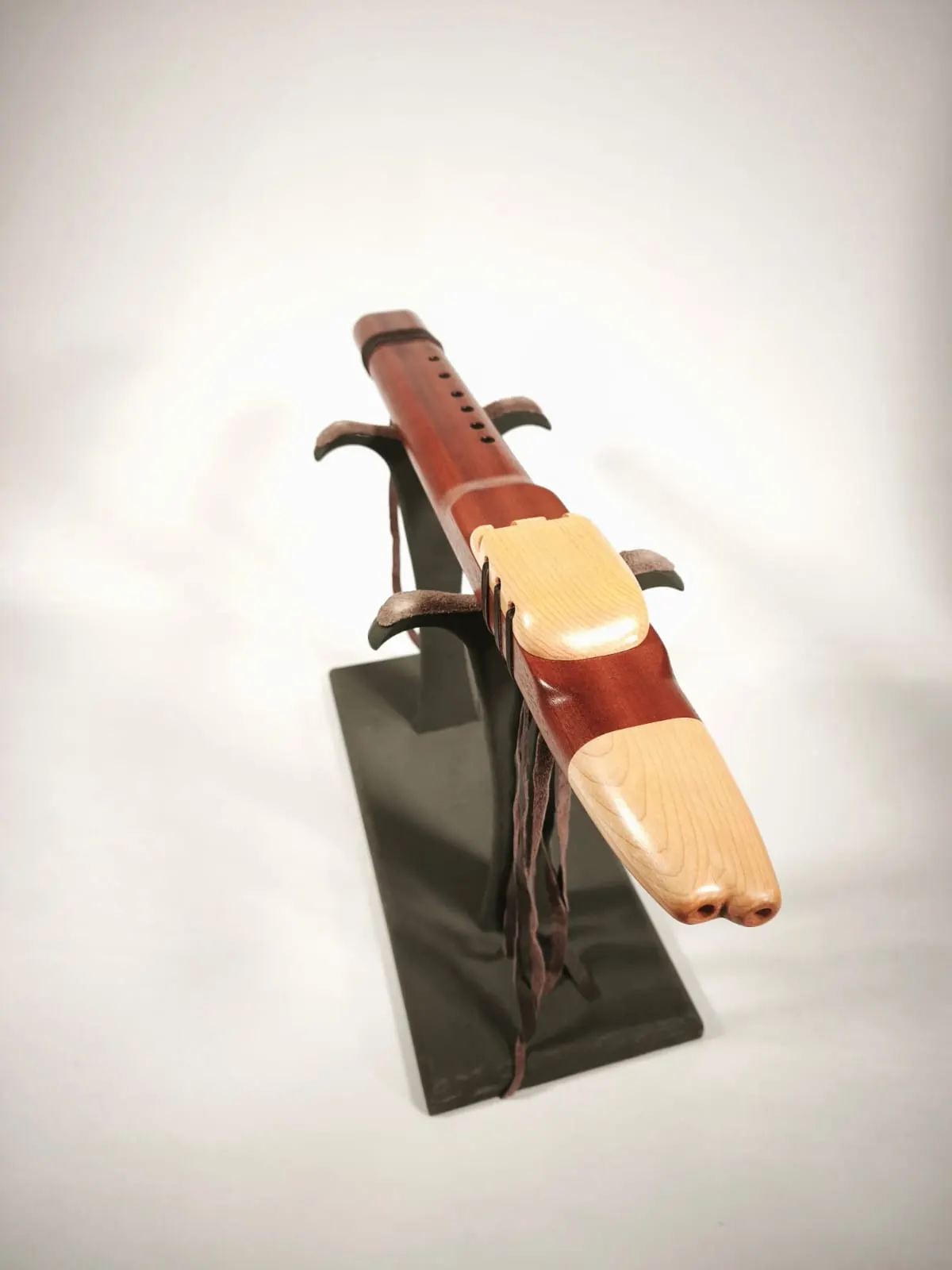
Right now the shop has two seven-hole drone flutes in the key of F#, both built and ready to ship. One has a maple body with padauk accents and is tuned to 440Hz. The other is sapele and maple, tuned to 432Hz. Same key, same scale, same thumb hole on the back. (If the two-chamber part is new to you, What Is a Drone Flute? covers it.)
On paper the gap between them is 8Hz. For many of the people looking for a 432Hz flute, that number carries far more weight than its size suggests, and the history behind it explains part of why.
440Hz was a decision, not a discovery
Most of the world tunes to 440Hz today: the note A above middle C vibrating 440 times a second, with every other note set from there. It feels like a law of nature, but it isn't one. For most of musical history there was no single A, and the pitch drifted from city to city and decade to decade.
France made the first big attempt to fix it, by government decree in 1859, at 435Hz. Italian musicians backed 432Hz in 1881, and in 1884 Giuseppe Verdi argued that even the French 435 was too high and that 432 was the pitch to keep. His view did not win. In 1939 an international conference in London recommended 440Hz, the International Organization for Standardization took it up in 1955, and confirmed it as the standard ISO 16 in 1975.
Even now the standard isn't held to everywhere. Many orchestras tune a little higher, to 442 or 443. So when musicians ask why 440 should be the number everyone follows, they are asking a fair question. It was chosen by people, and people have argued over it for as long as there has been a standard.
Seeing sound: Cymatics
In the late 1700s the German physicist Ernst Chladni scattered sand on metal plates and drew a violin bow along the edge. The sand gathered into geometric figures, different for each note. In 1967 the Swiss doctor Hans Jenny gave the study of these patterns a name, cymatics, and spent years photographing sound shaping sand, liquids and pastes.
Cymatics is where much of today's interest in 432Hz begins. Images of water and sand vibrating at 432Hz beside the same at 440Hz are shared widely among players, and many see in the 432 pictures a more balanced, more ordered form. Many players also describe music at 432Hz as something felt through the whole body rather than only heard, and a growing number of musicians record and release their music at 432Hz for that reason (True Solfeggio | 432Hz Studies). In meditation, breathwork and sound practice, that sense of the whole body taking part is exactly what people are looking for.
Many of my flutes are tuned to 432Hz, and I'm happy to tune to either.
What changes when you play
Moving from 440 to 432 lowers every note by the same small step: about 32 cents, a bit under a third of a semitone. A 432Hz flute plays the same minor pentatonic scale with the same fingerings, only the whole flute sits slightly lower.
That matters most when other instruments join in. A 432Hz flute plays happily with others tuned to 432. Against a piano, a guitar or a backing track at 440, every note lands a little flat. So my plain advice: if you want to play along with other instruments or recordings, 440Hz is the safer choice. On your own, for meditation, breathwork or sitting with the drone under a slow melody, there is nothing to match, and the choice is yours.
Hear the two F# flutes
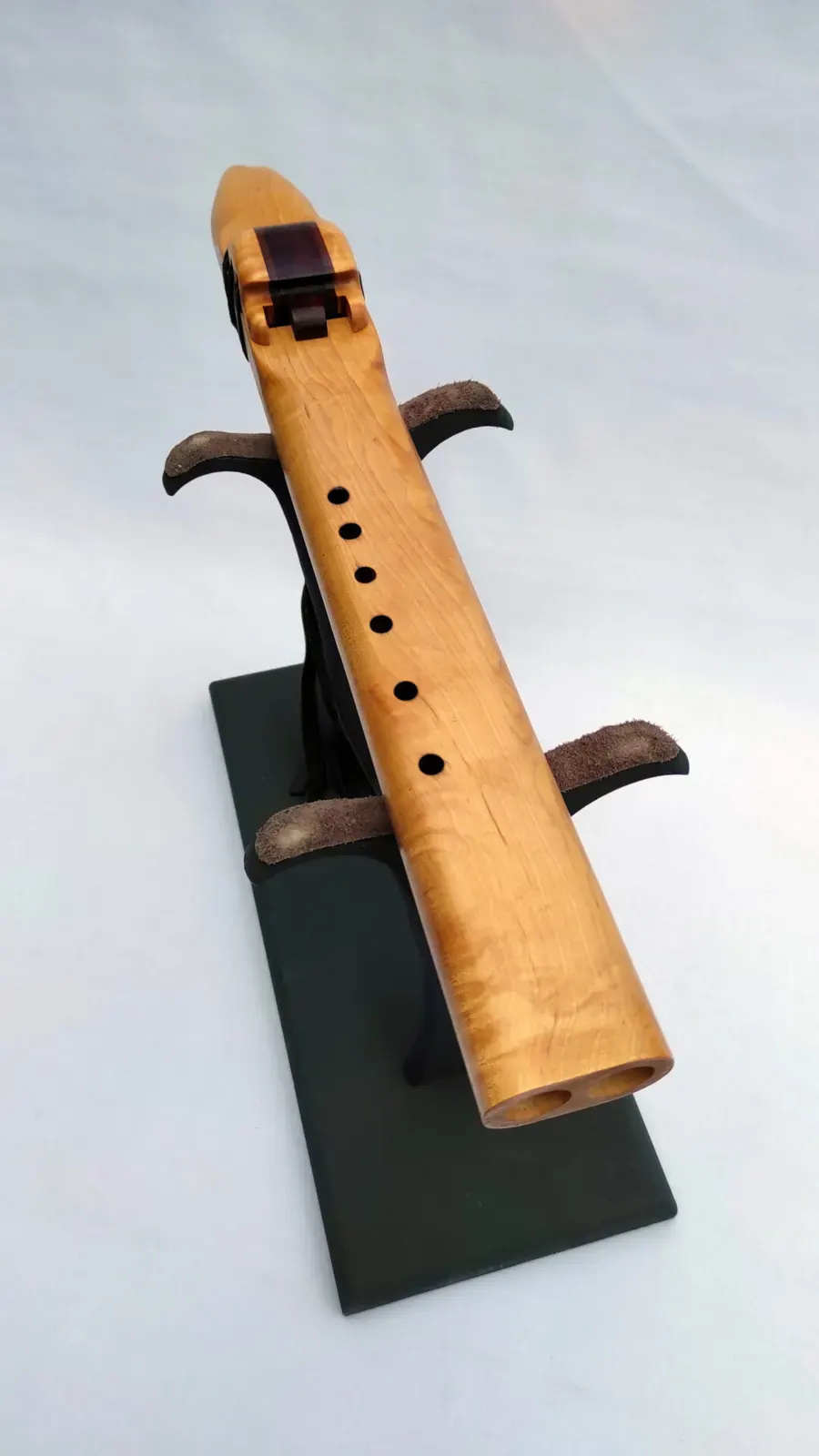
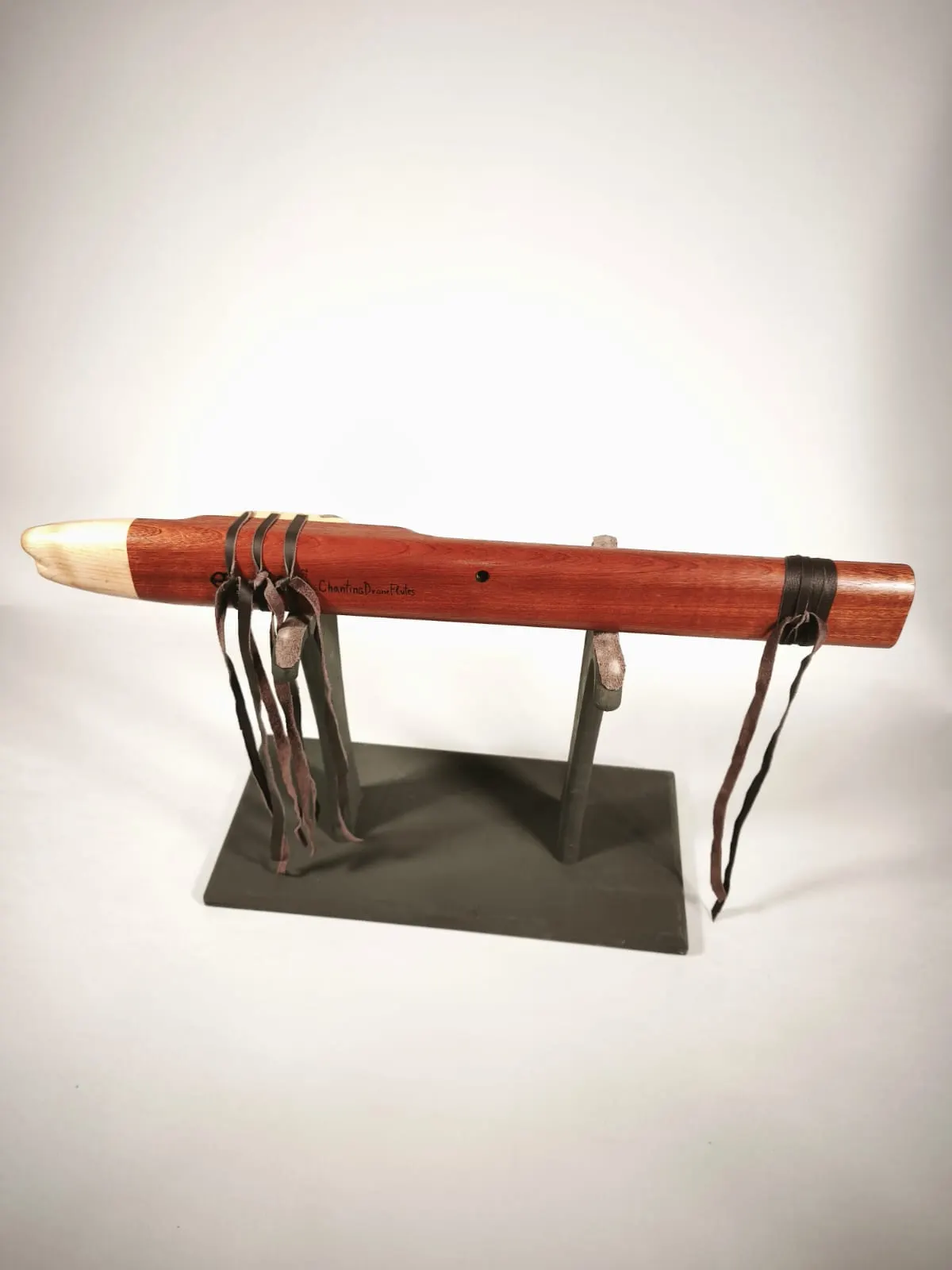
Both have a sound demo. They are not twins, so you are hearing more than the tuning. The 440Hz flute is maple with padauk accents, 22 inches long with a 7/8 inch bore, and it comes with a leather strap for covering the thumb hole when you want the standard six-hole scale. Its 432Hz sibling is sapele and maple, 25 inches long with a 1 inch bore.
If neither of these is the one, a built-to-order or custom flute can be tuned to either 432Hz or 440Hz. Just say which when you order. The Start Here page has the rest of the basics on keys and woods.
Curious about a flute of your own?