November 24, 2026
Choosing a Drone Flute Key for Your Hands: From A to Low D
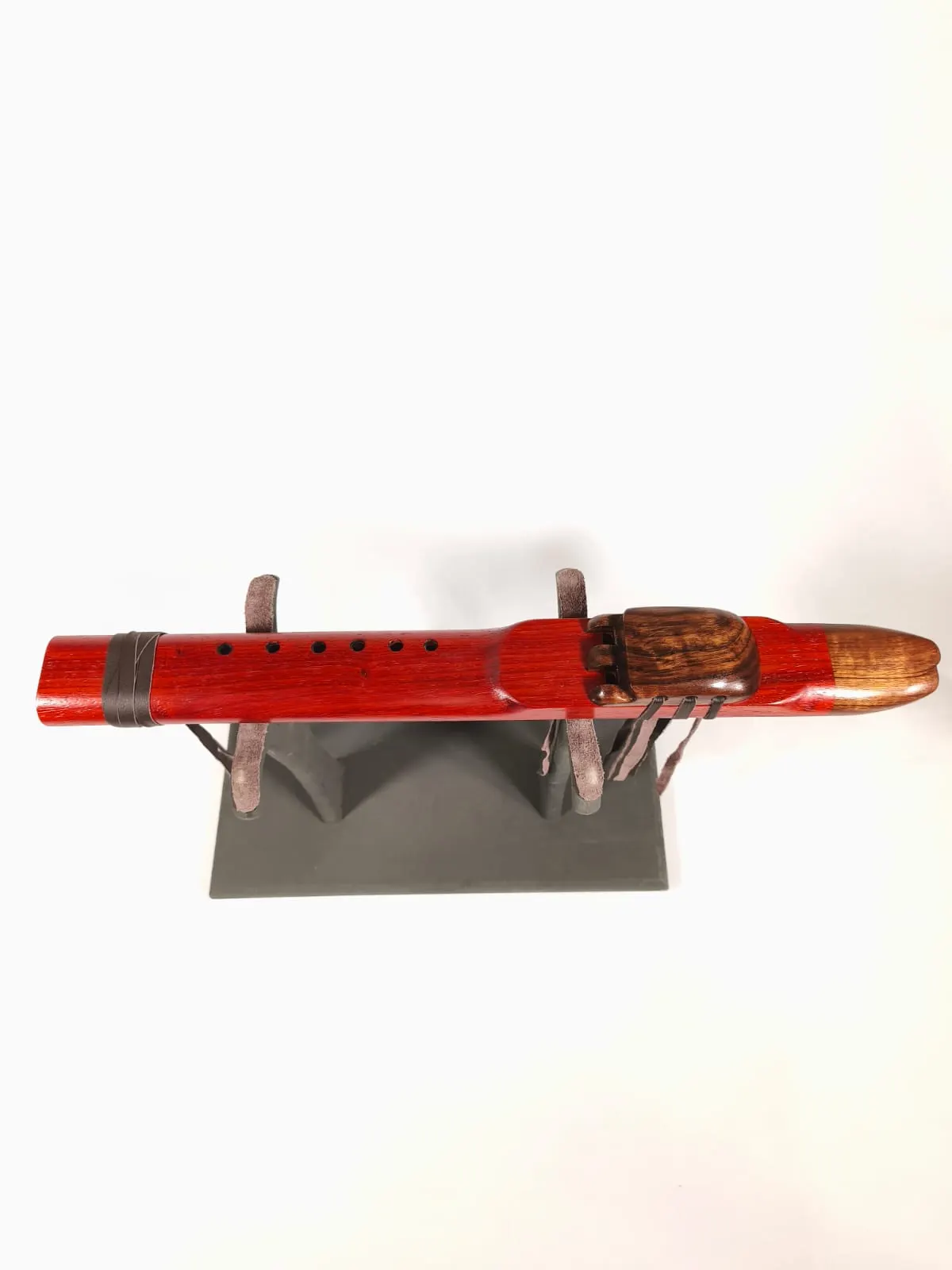
The shortest flute in my shop right now is a Key of A in padauk and maple, 20 and 1/2 inches long. At the other end sits a Key of Low D in Peruvian walnut and ovangkol, 27 and 1/2 inches. Both are double drone flutes with seven holes, and the seven inches between them is most of what matters when you're choosing a drone flute key for your hands.
Lower keys are bigger. The finger holes sit further apart, so your fingers spread wider, and a longer flute asks for more breath. Higher keys are smaller and lighter, with a brighter voice. They also cost more.
What's on the shelf, high to low
- Key of A, padauk and maple, 432Hz: 20 1/2 inches, 7/8 inch bore.
- Key of G, padauk and ovangkol, 432Hz: 23 inches, 7/8 inch bore.
- Key of F#, Peruvian walnut and sapele, 432Hz: 25 inches, 1 inch bore. Two more F# flutes at 432Hz, in sapele and maple and in padauk and sapele, are the same size.
- Key of Low D, Peruvian walnut and ovangkol, 432Hz: 27 1/2 inches, 1 inch bore.
Between the F# and the Low D there are Key of E and Key of Eb drone flutes in stock too. Every product page also lists the largest playing hole, the one a finger pad has to cover: 5/16 of an inch on the G and the F#, 3/8 on the A and the Low D. So hole size doesn't simply grow as the key drops.
Where your hands fit
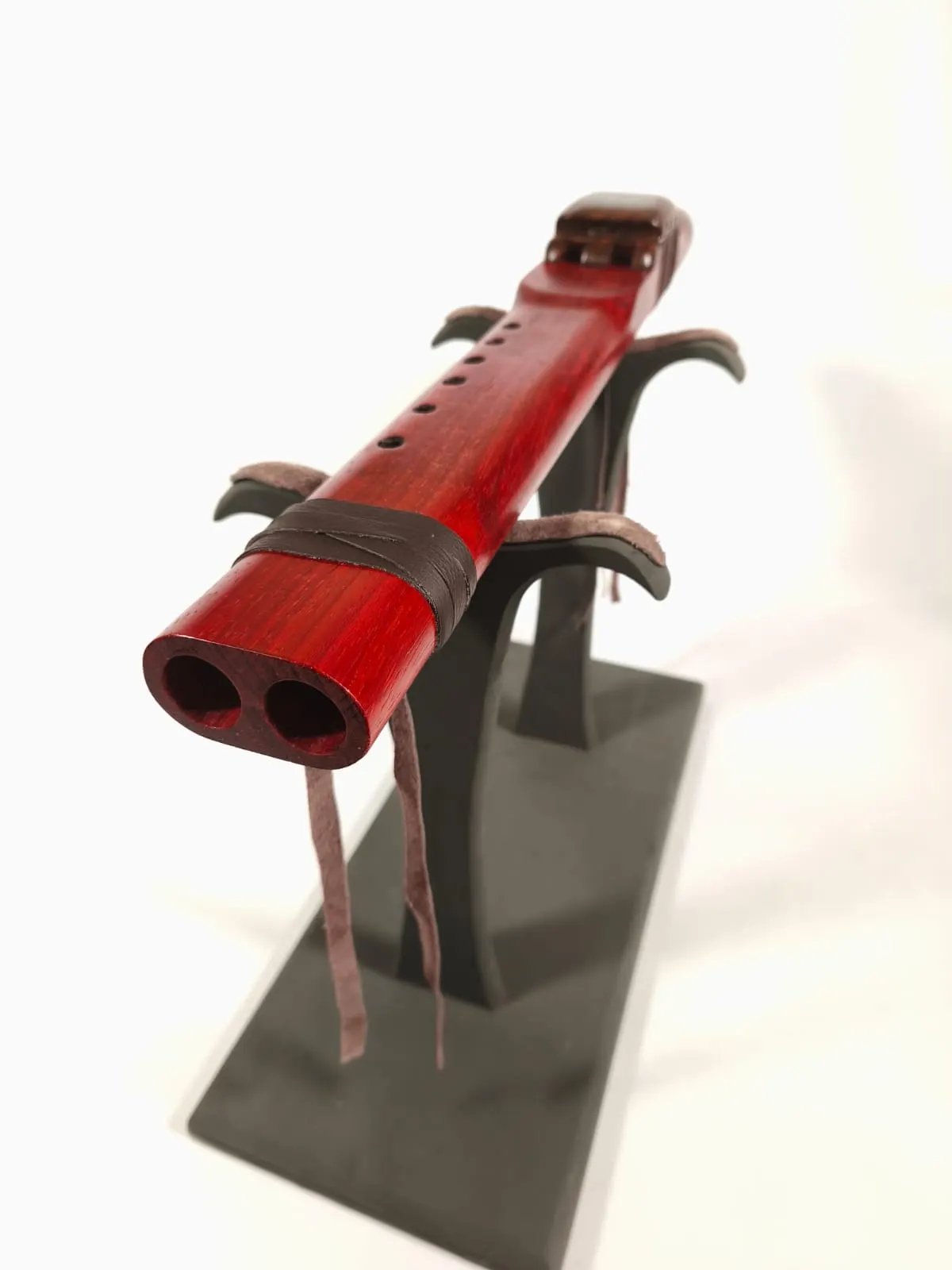
My rough guide, the same one on Start Here, goes like this. Higher keys such as high C, B and A are easier on very small hands and for children. The mid-range keys, G, F# and F, are comfortable for most hand sizes and a good choice for most players. Lower keys (E, low C, Low D and the bass G) need a wider finger spread and more breath.
I'd call the A a beginner's flute, except that would leave out a lot of the people who buy from me. Plenty of players go straight to a low key on day one. How much you love a flute's sound and look, and how much time you want to spend with it every day, counts for more than the letter in its name.
What the drone adds, and what it doesn't
On a drone flute the melody side is fingered like a single flute: same fingers, same pentatonic minor scale, nothing extra to finger for the drone. Your hands do the same work they would on a single flute of that key. Breath is different. Sounding two chambers takes a little more air than one, and that comes on top of what a lower key already asks. If your hands would manage a Low D but you run out of breath quickly, I'd start in the G or F# instead.
The seventh hole sits on the back, under your thumb. Keep it covered and you are playing a standard six-hole flute; open it for one more note above the scale. A built-to-order or custom flute can be made with six holes if you ask.
Hear two keys side by side
If you're torn between the middle keys, these two are the pair to compare. The G is 23 inches with a 7/8 inch bore. Two inches longer, the F# has a 1 inch bore.
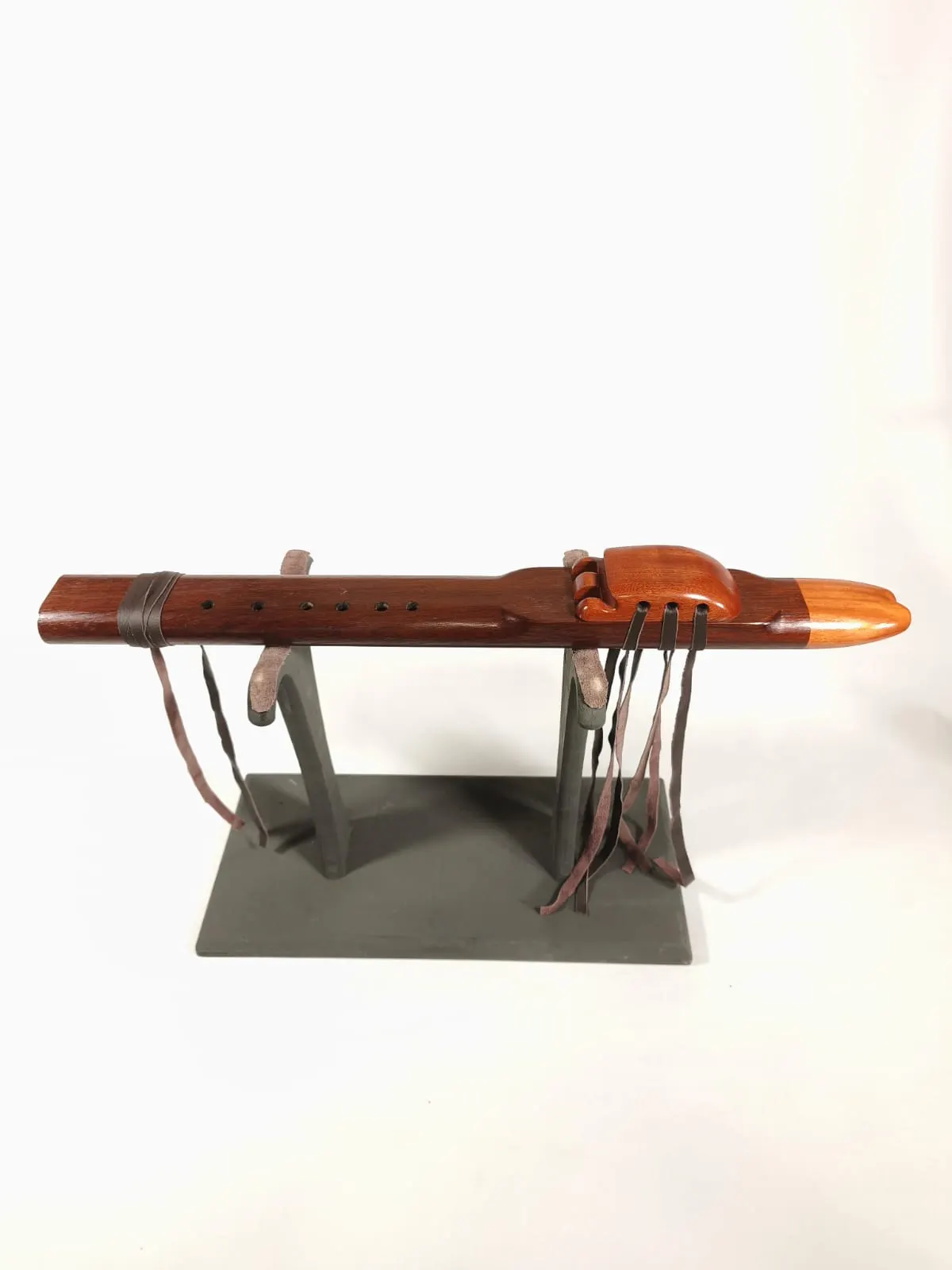
Hands are hard to judge from a photo. If you're unsure, write to me with what you want the flute for, and I'll help you choose, time permitting. Every flute is recorded on the Watch page, and if two chambers are new to you, What Is a Drone Flute? covers the basics.
Curious about a flute of your own?